
Aluminum is one of the most versatile metals used in modern industry. Its relatively low density, corrosion resistance, formability, and recyclability make it an important material for construction, transportation, packaging, electrical equipment, and industrial manufacturing.
However, aluminum is not a single product with identical characteristics in every application. It is supplied in different forms, alloys, and conditions, each designed for specific processing requirements and end uses.
Understanding the differences between aluminum ingots, sheets, plates, extrusions, and other products helps industrial buyers evaluate specifications, identify suitable materials, and make informed procurement decisions.
1. Understanding the Aluminum Value Chain
The aluminum value chain begins with raw material extraction and continues through refining, metal production, casting, fabrication, and manufacturing.
Bauxite Mining
Bauxite is the principal ore used in primary aluminum production. It contains aluminum-bearing minerals that must be processed before metallic aluminum can be produced.
Alumina Refining
Bauxite is refined into alumina, also known as aluminum oxide, commonly through the Bayer process. Alumina is the main feedstock for primary aluminum smelting.
Primary Aluminum Smelting
Primary aluminum is produced by electrolytic reduction of alumina, using the Hall-Heroult process. The resulting molten metal can be cast into various forms or processed further.
Secondary Aluminum Production
Secondary aluminum is produced by recovering and remelting aluminum scrap. Depending on its composition and processing, recycled material can be used to manufacture a wide range of aluminum products.
Both primary and secondary metal can enter downstream manufacturing processes, provided that the required chemical composition and product specifications are achieved.
2. Aluminum Ingots: An Important Starting Material
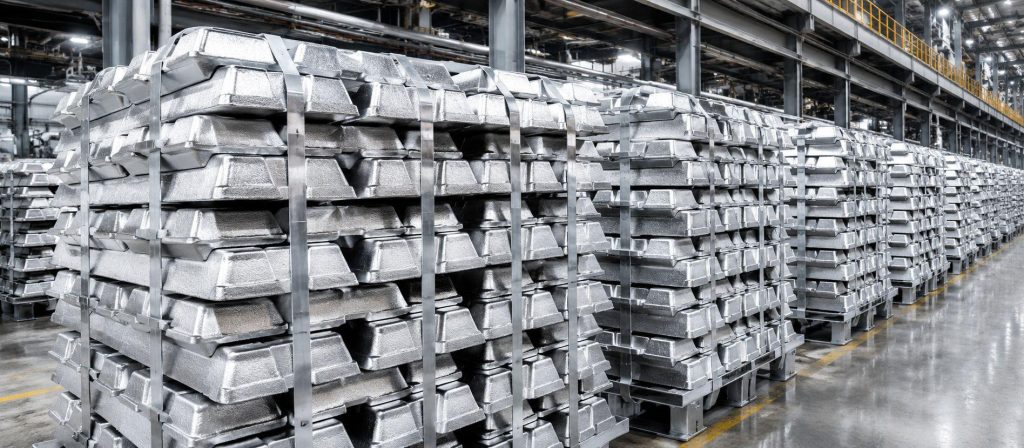
Aluminum ingots are cast metal products used as feedstock for remelting, alloy production, casting operations, and certain downstream manufacturing processes.
The term “ingot” can refer to different casting forms, so industrial buyers should confirm the precise product type and intended application.
Remelting Ingots
Remelting ingots are supplied to foundries and other facilities that melt aluminum for further processing. Their suitability depends on composition, purity, and the requirements of the receiving process.
Casting Alloys
Aluminum casting alloys contain controlled amounts of alloying elements to achieve properties such as strength, castability, and corrosion resistance.
Different casting alloys may be selected for automotive components, machinery parts, housings, and other engineered products.
Billets and Rolling Slabs
Aluminum billets are commonly used as starting material for extrusion. Rolling slabs are designed for processing into flat products such as sheets and plates.
These cast forms are not interchangeable in every manufacturing process. Dimensions, alloy composition, casting quality, and downstream equipment requirements must be considered.
3. Aluminum Sheets, Plates, and Coils
Flat aluminum products are produced mainly through rolling processes that reduce the thickness of cast material while creating the required dimensions and surface properties.
Aluminum Sheets
Aluminum sheets are flat products used in construction, transportation, industrial fabrication, appliances, and many other applications.
Depending on the specification, sheets may be supplied with different finishes, coatings, mechanical properties, and dimensional tolerances.
Aluminum Plates
Aluminum plates are generally thicker than sheets and may be used for structural components, industrial equipment, tooling, and other demanding applications.
The distinction between sheet and plate should follow the applicable product standard rather than a single universal thickness assumption.
Aluminum Coils
Coils are continuous lengths of rolled aluminum supplied in wound form. They can be processed through cutting, forming, coating, or other manufacturing operations.
When sourcing flat aluminum products, buyers should specify alloy, temper, dimensions, tolerances, surface condition, and applicable manufacturing standards.
4. Aluminum Extrusions and Profiles
Aluminum extrusion is a manufacturing process in which heated metal is forced through a shaped die to produce a continuous profile with a particular cross-section.
The process allows manufacturers to create simple and complex shapes suitable for different engineering and architectural requirements.
Common Extruded Products
- Solid and hollow aluminum profiles
- Channels, angles, and structural sections
- Bars and rods
- Architectural framing systems
- Custom industrial profiles
Extruded products are used in building systems, machinery, transportation equipment, electrical enclosures, and many other industrial applications.
Custom profiles may require detailed drawings, dimensional tolerances, surface finish requirements, and agreement on tooling before production.
5. Aluminum Alloys and Tempers
The performance of an aluminum product depends not only on its physical form but also on its alloy composition and temper.
Alloying elements can influence strength, formability, corrosion resistance, and other material properties. Temper designations describe the condition resulting from processing or treatment.
Common Wrought Aluminum Alloy Families
- 1xxx series: Primarily unalloyed aluminum, often selected where high electrical or thermal conductivity is important.
- 3xxx series: Manganese-containing alloys used in various sheet and formed-product applications.
- 5xxx series: Magnesium-containing alloys valued in applications requiring a useful combination of strength and corrosion resistance.
- 6xxx series: Magnesium-silicon alloys widely used for extruded profiles and structural applications.
Individual alloys within each family can have different properties, so buyers should avoid treating an entire alloy series as one identical material.
Understanding Temper Designations
Temper designations indicate the material’s processing condition. For example, O generally refers to an annealed condition, H designations are associated with strain-hardened products, and T designations describe certain thermally treated conditions.
Specific alloy and temper combinations should be verified against the relevant standard and product specification.
6. Major Industrial Applications of Aluminum
Aluminum products support a wide variety of industries because manufacturers can select from different alloys, production methods, and product forms.
Construction and Architecture
Extruded profiles, sheets, and other aluminum products are used in window and door systems, facades, cladding, framing, and architectural components.
Transportation
Aluminum is used in selected automotive, railway, marine, and aerospace components. Material choice depends on the strength, weight, durability, and manufacturing requirements of each application.
Packaging
Rolled aluminum products are used in beverage containers, closures, foil, and other packaging applications where the specified material and manufacturing process are suitable.
Electrical and Industrial Equipment
Certain aluminum grades are used in conductors, electrical components, machinery, equipment housings, and thermal management systems.
7. What Buyers Should Check Before Sourcing Aluminum
Industrial aluminum procurement involves more than selecting a general product name. Buyers should confirm the technical and commercial details before placing an order.
- Product form: Ingots, billets, sheets, plates, coils, extrusions, or castings.
- Alloy and temper: The exact material designation required for the intended application.
- Dimensions and tolerances: Thickness, width, length, diameter, profile geometry, and permitted deviations.
- Surface finish: Mill finish, anodizing, coating, or other specified treatment where applicable.
- Technical documentation: Material certificates, test reports, and traceability information as required by the purchase specification.
- Packaging and handling: Protection against damage, contamination, and moisture exposure during storage and shipment.
- Commercial terms: Quantity, delivery schedule, inspection arrangements, and agreed Incoterms rules.
These considerations are particularly important in international transactions, where technical misunderstandings or incomplete documentation can create additional costs and delivery risks.
8. Recycling and the Aluminum Supply Chain
Aluminum can be recycled and reused in new products. Recycled metal is an important part of the aluminum supply chain, alongside primary production.
Successful recycling requires appropriate scrap collection, sorting, processing, and composition control. Different applications may have different restrictions on impurities and alloy chemistry.
For buyers, the presence of recycled material does not eliminate the need to verify product quality. The relevant question is whether the delivered aluminum meets the agreed material specification.
9. The KGG Perspective
At Keysan Golden Gate Trading (KGG), we recognize that aluminum sourcing requires a clear understanding of product forms, material specifications, and international supply chain considerations.
From ingots and rolled sheets to extruded profiles, each aluminum product category has distinct technical and commercial requirements.
Understanding these differences can help businesses evaluate procurement opportunities, communicate their material requirements, and plan international sourcing activities more effectively.
Businesses seeking information about aluminum products and sourcing opportunities are welcome to contact KGG with their product specifications and commercial inquiries.
Conclusion
The aluminum industry connects raw material producers, refiners, smelters, recyclers, fabricators, manufacturers, and international trading companies.
Aluminum ingots, sheets, plates, coils, and extruded profiles serve different industrial purposes and should be evaluated according to their specific characteristics.
For industrial buyers, understanding aluminum alloys, tempers, product forms, and quality documentation provides a stronger foundation for effective sourcing and procurement decisions.
References
- The Aluminum Association — Aluminum Production and Processing
- The Aluminum Association — Processing 101
- The Aluminum Association — Aluminum Standards
- International Aluminium Institute — Aluminium Life Cycle Thinking
This article is provided for general industry information. Material selection and product requirements should be verified against applicable standards, supplier documentation, and project specifications.