Zinc is one of the essential non-ferrous metals used in modern industrial production. Its importance extends across steel protection, construction, infrastructure, automotive manufacturing, alloy production, and chemical processing.
For companies involved in international metals trading, zinc requires careful evaluation of product grade, chemical composition, technical specifications, and commercial requirements.
This industry overview examines zinc’s major applications, internationally recognized purity grades, quality-control requirements, and practical considerations for industrial buyers.
Zinc Industry at a Glance
- Chemical symbol: Zn
- Atomic number: 30
- Principal ore mineral: Sphalerite (zinc sulfide)
- Major application: Galvanizing steel for corrosion protection
- Other applications: Brass, zinc-based die-casting alloys, rolled products, and zinc compounds
- Special High Grade (SHG): Minimum 99.995% zinc purity under applicable London Metal Exchange specifications
- Important commercial factors: Purity, impurity limits, documentation, packaging, delivery terms, and material traceability
Sources: U.S. Geological Survey (USGS) and London Metal Exchange (LME).
1. Zinc and Its Role in Global Industry
Zinc is an important component of industrial supply chains, particularly in sectors requiring durable metal products and corrosion-resistant infrastructure.
According to the U.S. Geological Survey, approximately three-quarters of zinc consumption is associated with metallic applications, while the remainder is used in zinc compounds.
Metallic zinc is primarily used for galvanizing, alloy production, die casting, and rolled products.
Zinc compounds are used in industries including rubber manufacturing, chemicals, coatings, and agriculture.
These diverse applications make zinc relevant to manufacturers, industrial buyers, and international metals trading companies.
The commercial importance of zinc is closely connected to industrial production, infrastructure development, steel manufacturing, and the availability of refined metal.
2. Galvanizing: Zinc’s Major Industrial Application
One of zinc’s most important uses is protecting steel against corrosion.
Galvanizing applies a zinc coating to steel, helping protect the underlying material during exposure to atmospheric and industrial environments.
The coating acts as a physical barrier and can also provide sacrificial protection to exposed steel in appropriate service conditions.
Why Galvanizing Matters
Galvanized steel is used in:
- Construction and structural components
- Infrastructure and utility installations
- Industrial equipment and support structures
- Automotive components and manufactured parts
- Agricultural equipment and facilities
- Steel pipes, fasteners, and fabricated products
- Transportation and energy-related infrastructure
The appropriate galvanizing process depends on the steel product, intended operating environment, coating requirements, and applicable technical standards.
Common Galvanizing Processes
Hot-dip galvanizing
Steel components are immersed in molten zinc to form a protective coating. This process is widely used for structural steel, fabricated products, and industrial equipment.
Continuous galvanizing
Steel sheet or strip passes through a continuous coating process. This method is commonly used in the production of galvanized steel coils and sheets.
Electrogalvanizing
An electrolytic process deposits zinc onto steel surfaces. It may be selected where controlled coating thickness and surface finish are important.
For industrial buyers, coating thickness, adhesion, surface condition, and compliance with the specified standard are important considerations.
3. Zinc Grades and Purity Specifications
Not all commercially available zinc products have the same purity or chemical composition.
The appropriate grade depends on the intended industrial application and the buyer’s technical requirements.
Special High Grade Zinc
Special High Grade (SHG) zinc is commonly referenced in international refined-zinc trading.
Under London Metal Exchange contract specifications, SHG zinc must contain at least 99.995% zinc, with chemical composition conforming to an accepted standard.
Examples of referenced specifications include:
- BS EN 1179
- ISO 752
- ASTM B6
- GB/T 470
These standards address the chemical composition of refined zinc and the relevant grade requirements.
A high purity percentage alone does not establish full compliance. Buyers should also verify the permissible concentrations of individual impurities and the requirements of the applicable standard.
Other Commercial Zinc Grades
Depending on the producer and market, zinc may also be available in other refined-metal grades or compositions intended for particular manufacturing processes.
These materials should not automatically be treated as interchangeable with SHG zinc.
Grade selection should be based on:
- Required zinc purity
- Maximum permitted impurity levels
- Manufacturing process
- Intended end use
- Applicable national or international standard
- Customer-specific technical requirements
4. Zinc in Alloy Production
Zinc is used in several important industrial alloys.
Brass Production
Brass is primarily an alloy of copper and zinc.
Different compositions provide a range of mechanical properties, workability, and corrosion resistance.
Brass is used in applications such as:
- Valves and fittings
- Plumbing components
- Electrical connectors
- Industrial hardware
- Decorative and architectural products
- Precision-manufactured components
For brass producers, consistent zinc composition is important for maintaining predictable alloy characteristics.
Zinc Die-Casting Alloys
Zinc-based casting alloys are widely used for producing complex metal components.
Depending on the alloy specification, these materials may contain controlled additions of aluminum, copper, magnesium, or other elements.
Typical applications include:
- Automotive components
- Mechanical hardware
- Electrical and electronic housings
- Furniture fittings
- Industrial equipment components
- Consumer and commercial products
Die-casting manufacturers generally require stable chemical composition and appropriate control of trace impurities.
5. Zinc Compounds and Chemical Applications
In addition to metallic uses, zinc is an important raw material for several industrial compounds.
One of the most widely used zinc compounds is zinc oxide (ZnO).
Zinc oxide has applications in:
- Rubber manufacturing
- Coatings and pigments
- Ceramics
- Chemical processing
- Selected agricultural applications
- Specialized industrial formulations
Other zinc compounds are used in manufacturing processes where their specific chemical or physical properties are required.
Buyers of zinc compounds should distinguish between metallic-zinc specifications and the separate quality requirements applicable to chemical products.
Relevant factors may include chemical identity, concentration, particle characteristics, impurity limits, and handling documentation.
6. Zinc Quality Control and Material Verification
Quality assurance is an important part of industrial zinc procurement.
Although products may be marketed under the same general grade description, buyers should verify the actual material specification and supporting documentation.
Chemical Composition
The chemical analysis should confirm that the material meets the agreed grade and applicable impurity limits.
Depending on the specification, relevant impurities may include:
- Lead (Pb)
- Cadmium (Cd)
- Iron (Fe)
- Copper (Cu)
- Tin (Sn)
- Other elements specified by the applicable standard
The acceptance limits must be determined from the relevant grade specification rather than assumed from a general purity description.
Certificate of Analysis
A Certificate of Analysis (CoA) can provide important information about the supplied material.
Depending on the producer and transaction, documentation may include:
- Producer or brand identification
- Material grade
- Batch or lot identification
- Chemical composition
- Relevant analytical results
- Reference specification
- Date of testing or certificate issuance
Buyers should confirm that the documentation corresponds to the actual goods being delivered.
Inspection and Verification
Independent inspection may be considered when required by the contract or the buyer’s quality-management procedures.
Inspection activities may include checking material identification, packaging, weight, markings, and available documentation.
Where laboratory testing is required, sampling methods and acceptance criteria should be agreed before shipment.
7. Commercial Forms of Zinc
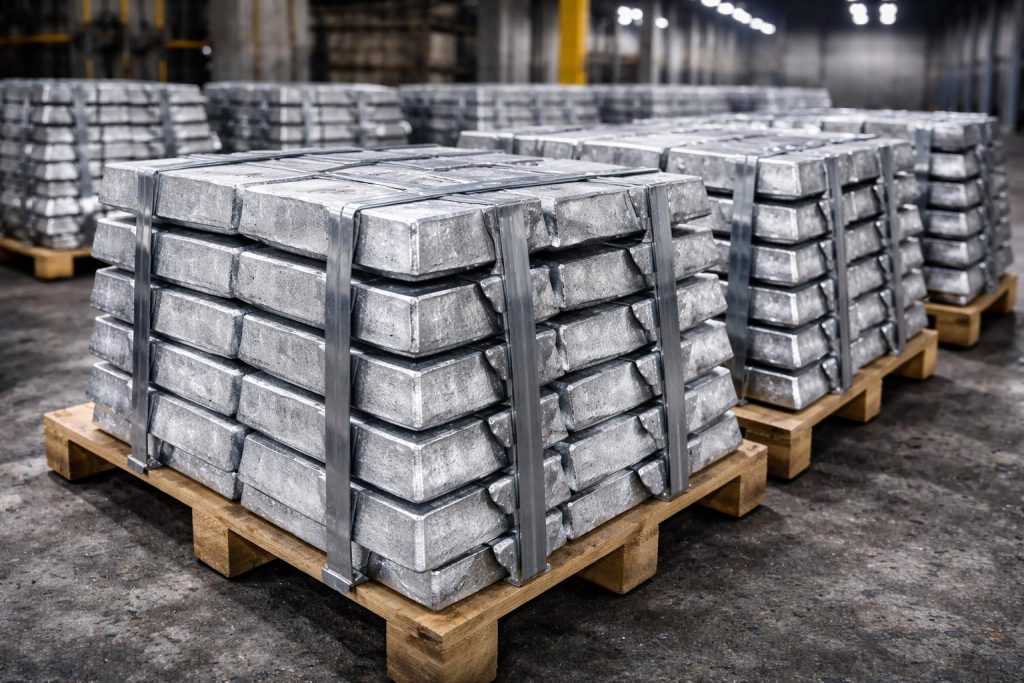
Refined zinc is commonly traded in physical forms suitable for industrial storage, handling, and processing.
Examples include:
- Standard zinc ingots
- Larger zinc ingots or jumbo ingots
- Other producer-specific forms, subject to commercial availability
The appropriate form depends on the buyer’s production equipment, handling capabilities, and material requirements.
Packaging and Identification
Packaging and identification requirements may include:
- Bundle configuration
- Individual or bundle weight
- Producer identification
- Grade and lot markings
- Strapping and securing methods
- Handling requirements
Consistent identification and documentation help reduce the risk of shipment discrepancies and material mix-ups.
8. International Zinc Trading Considerations
International zinc transactions require attention to technical and commercial terms.
Price is important, but it should not be the only factor considered when evaluating a transaction.
Material Specification
The purchase agreement should clearly identify:
- Product description
- Required grade
- Chemical composition limits
- Applicable technical standard
- Physical form
- Quantity and permitted tolerance
- Packaging requirements
Clear specifications reduce uncertainty between buyers, traders, and suppliers.
Pricing and Market References
The London Metal Exchange provides internationally recognized reference prices and contracts for refined zinc.
Commercial physical-zinc pricing may reference an LME quotation together with an agreed premium, discount, or other contractual adjustment.
The final transaction price can depend on factors such as product grade, brand, location, quantity, delivery terms, and market conditions.
A reference exchange quotation should not be confused with a guaranteed physical delivery price.
Delivery Terms
International transactions should specify the agreed Incoterms rule and named destination or delivery point.
The parties should also determine responsibility for:
- Export documentation
- Transportation arrangements
- Cargo insurance, where applicable
- Customs procedures
- Loading and unloading obligations
- Shipment inspection
- Delivery schedules
Responsibilities vary according to the selected Incoterms rule and the commercial agreement.
9. Logistics and Transportation of Zinc
Zinc shipments require appropriate preparation to protect the goods and support efficient cargo handling.
The required arrangements depend on shipment volume, product form, packaging, transport mode, and destination.
Cargo Preparation
Before shipment, industrial buyers and suppliers should review:
- Package and bundle integrity
- Cargo identification
- Declared weights
- Loading and securing arrangements
- Applicable transport documentation
- Storage and handling conditions
Moisture and Storage Considerations
Zinc products should be stored and transported under conditions appropriate to their form and specified surface requirements.
Unnecessary exposure to moisture, contamination, or unsuitable handling conditions can affect surface condition or packaging integrity.
The precise precautions should be based on the product specification and supplier guidance.
International Documentation
A typical international transaction may require documents such as:
- Commercial invoice
- Packing list
- Transport document
- Certificate of origin, where required
- Certificate of Analysis
- Inspection documents, where contractually required
Additional documentation may be necessary depending on the destination and applicable regulations.
10. Zinc Supply Chains and Market Factors
The global zinc supply chain includes mining, concentrate production, smelting, refining, industrial distribution, and end-use manufacturing.
Changes at any of these stages can influence the availability and commercial conditions of zinc products.
Important market considerations include:
Mining and concentrate availability
The supply of zinc concentrates affects the feedstock available to smelters and refineries.
Smelting and refining capacity
Operational capacity, production costs, and plant availability can influence refined-zinc supply.
Industrial demand
Construction, infrastructure, automotive manufacturing, and industrial production contribute to demand for zinc and zinc-containing products.
Energy and operating costs
Refining processes require energy and other industrial inputs, making operating conditions relevant to production economics.
Transportation and trade conditions
Freight availability, port operations, customs procedures, and delivery routes can affect transaction planning.
Market conditions change over time, so commercial decisions should use current data rather than historical assumptions alone.
11. Key Considerations for Industrial Zinc Buyers
When evaluating a zinc purchase, buyers should prioritize material suitability and contractual clarity.
A practical procurement review should address the following questions:
- Does the specified zinc grade match the intended application?
- Are the required purity and impurity limits clearly documented?
- Does the Certificate of Analysis correspond to the supplied batch?
- Are the producer, brand, and material origin adequately identified?
- Is the proposed physical form compatible with the buyer’s equipment?
- Are packaging, weight, and quantity tolerances agreed?
- Are the pricing basis and applicable premiums clearly stated?
- Are the delivery terms and shipment responsibilities understood?
- Have inspection requirements been established before dispatch?
- Are the necessary commercial and transport documents available?
A structured procurement process can help buyers identify discrepancies before material is shipped or received.
12. KGG’s Perspective on Zinc Trading
At Keysan Golden Gate Trading (KGG), zinc is considered part of the wider industrial metals value chain.
Industrial buyers need more than a general product description. They require clarity regarding material specifications, commercial conditions, quality documentation, and international transportation requirements.
KGG’s trading approach emphasizes practical coordination across these areas, including evaluation of sourcing requirements, documentation considerations, and international supply-chain needs.
By connecting technical understanding with commercial planning, industrial trading companies can support more informed procurement decisions and smoother communication between counterparties.
Conclusion
Zinc remains an essential industrial material because of its role in corrosion protection, alloy manufacturing, chemical production, and a broad range of manufactured products.
For international industrial buyers, successful procurement depends on more than availability and price. Product grade, purity, impurity limits, material verification, packaging, shipping documentation, and delivery terms all require attention.
Understanding these factors helps companies evaluate zinc products more effectively and manage the technical and commercial requirements of cross-border trade.
References
- U.S. Geological Survey — Zinc Statistics and Information
- London Metal Exchange — Zinc Contract Specifications
- International Zinc Association — Zinc Alloys in Die Casting
This article is intended for general industrial and commercial information. Material specifications, chemical composition requirements, transport arrangements, and contractual conditions should be verified against the applicable standards, supplier documentation, and current regulations.