International trade involves more than agreeing on a product specification and a selling price. When industrial materials move between countries, buyers and sellers must also determine who arranges transportation, who pays related costs, and when the risk of loss or damage transfers from one party to the other.
These questions are particularly important when trading steel, aluminum, polymers, and other industrial materials that may require specialized packaging, handling, inspection, and international transportation.
Incoterms 2020 provides an internationally recognized framework for clarifying these responsibilities. Understanding the rules can help businesses communicate more effectively, evaluate quotations, and reduce misunderstandings in cross-border transactions.
1. What Are Incoterms 2020?
Incoterms, short for International Commercial Terms, are internationally recognized trade rules published by the International Chamber of Commerce (ICC).
The Incoterms 2020 rules contain eleven standardized terms that help define the respective responsibilities of buyers and sellers in contracts for the sale of goods.
In particular, they address:
- Where and when delivery takes place
- When the risk of loss or damage transfers
- Which party arranges transportation
- Which party pays specified transport-related costs
- Responsibilities for export and import formalities
- Certain insurance and documentation obligations
Incoterms rules do not replace a complete sales contract. They do not, by themselves, determine the transfer of ownership, payment terms, product quality requirements, or every consequence of a contractual dispute.
2. The Two Main Groups of Incoterms 2020
Incoterms 2020 divides its eleven rules into two groups according to the transportation methods for which they are intended.
Rules for Any Mode of Transport
These seven rules may be used for road, rail, air, sea, or multimodal transportation:
- EXW: Ex Works
- FCA: Free Carrier
- CPT: Carriage Paid To
- CIP: Carriage and Insurance Paid To
- DAP: Delivered at Place
- DPU: Delivered at Place Unloaded
- DDP: Delivered Duty Paid
Rules for Sea and Inland Waterway Transport
These four rules are specifically intended for sea and inland waterway transportation:
- FAS: Free Alongside Ship
- FOB: Free On Board
- CFR: Cost and Freight
- CIF: Cost, Insurance and Freight
Selecting a rule that matches the transportation method and the actual delivery arrangement is essential.
3. EXW: Ex Works
Under EXW, the seller makes the goods available to the buyer at the agreed named place, commonly the seller’s premises.
The buyer assumes substantial responsibility for collecting and transporting the goods, including loading and export formalities under the standard allocation of obligations.
Although EXW may appear straightforward, it can create practical difficulties in international transactions when the buyer cannot easily complete export procedures in the seller’s country.
For that reason, FCA may be a more appropriate choice in many cross-border shipments.
4. FCA: Free Carrier
Under FCA, the seller delivers the goods to the carrier or another person nominated by the buyer at the agreed place.
The seller is responsible for export clearance where applicable. Risk transfers when delivery takes place in accordance with the agreed FCA arrangement.
FCA is particularly useful for containerized goods and multimodal transport because the cargo may be handed over to a carrier or terminal before it is loaded onto a vessel.
When choosing FCA, both parties should identify the named delivery place precisely, since seller loading responsibilities can differ depending on whether delivery occurs at the seller’s premises or another location.
5. FOB: Free On Board
FOB is commonly used in maritime trade, including transactions involving certain bulk commodities and industrial materials.
Under FOB, the seller delivers the goods on board the vessel nominated by the buyer at the agreed port of shipment.
The risk of loss or damage transfers when the goods are on board the vessel. The buyer generally arranges and pays for the main sea carriage.
Industrial example: A buyer purchasing steel products under FOB terms must understand that the seller’s delivery obligation is linked to placing the goods on board the nominated vessel, rather than delivering them to the final destination.
FOB is not generally appropriate when containerized goods are handed over to a carrier at a terminal before vessel loading. In such cases, FCA should be considered.
6. CFR: Cost and Freight
Under CFR, the seller arranges and pays for the carriage required to transport the goods to the named destination port.
However, an important distinction exists between transportation costs and the transfer of risk.
Although the seller pays the agreed freight to the destination port, the risk generally transfers to the buyer when the goods are loaded on board the vessel at the shipment port.
Buyers should not assume that seller-paid freight means the seller retains responsibility for cargo risk throughout the voyage.
7. CIF: Cost, Insurance and Freight
CIF resembles CFR, but also requires the seller to arrange insurance coverage for the buyer’s risk during carriage, according to the applicable rule.
Under CIF, the seller pays the agreed cost of carriage to the named destination port and obtains the required insurance.
The risk of loss or damage nevertheless transfers when the goods are on board the vessel at the port of shipment.
Under the standard CIF rule, the seller’s insurance obligation is generally based on minimum cover. Buyers requiring broader protection should arrange it expressly in the contract or obtain additional coverage.
Important distinction: CIF does not mean that the seller bears cargo risk until the shipment arrives at the destination port. Insurance and risk transfer are separate considerations.
8. DAP: Delivered at Place
Under DAP, the seller delivers the goods at the named destination, ready for unloading from the arriving means of transport.
The seller generally bears transportation costs and risks until the agreed delivery point is reached.
The buyer normally handles import clearance, import duties and applicable taxes, as well as unloading, unless the contract provides additional arrangements.
DAP can be useful where the buyer wants the seller to organize transportation to a specified facility, warehouse, or other named destination while retaining responsibility for import procedures.
9. Why Costs and Risks Must Be Considered Separately
One of the most common misunderstandings in international trade is treating the party paying for transportation as the party automatically responsible for all transport risks.
Incoterms 2020 does not follow that assumption in every rule.
For example:
- FOB: The buyer generally arranges main sea carriage, with risk transferring on board at the shipment port.
- CFR: The seller pays freight to the named destination port, but risk transfers on board at the shipment port.
- CIF: The seller pays freight and arranges the required insurance, but risk also transfers on board at the shipment port.
- DAP: The seller generally bears transport risk up to the agreed destination delivery point.
Understanding this distinction is essential when assessing insurance needs, handling damage claims, and negotiating transportation arrangements.
10. Choosing Incoterms for Industrial Materials
The appropriate Incoterms rule depends on the shipment, transportation method, commercial arrangement, and capabilities of the buyer and seller.
Bulk Steel and Raw Materials
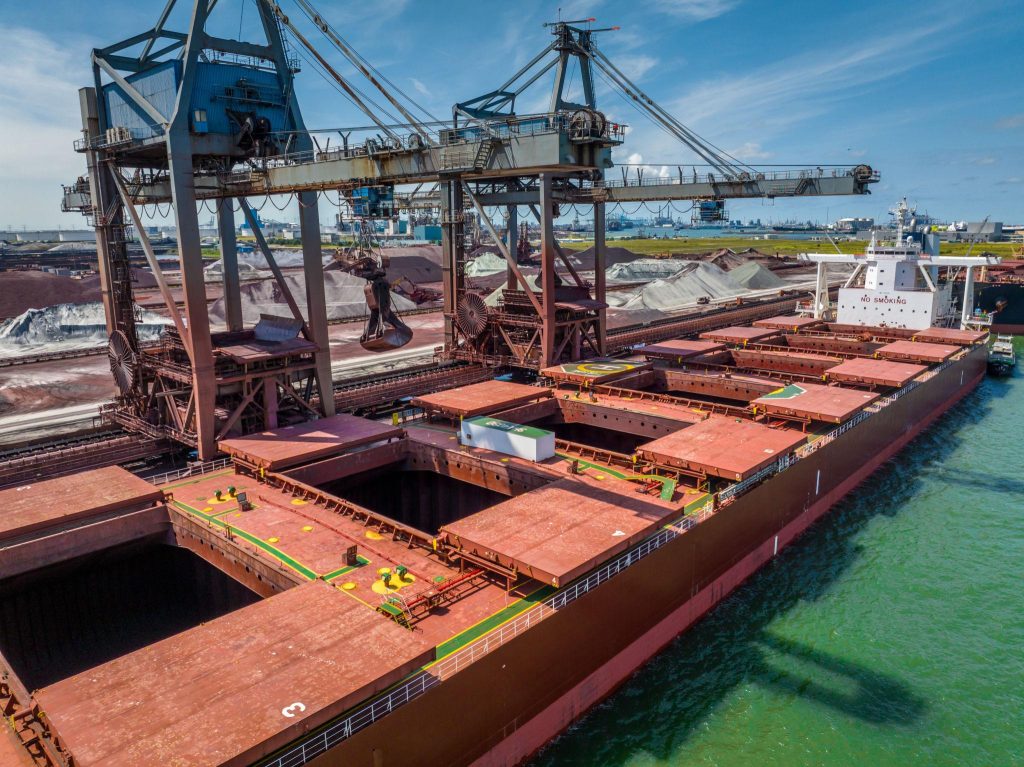
Bulk shipments such as iron ore or certain steel cargoes may involve marine terms such as FOB, CFR, or CIF where delivery occurs on board a vessel in accordance with the rule.
Containerized Aluminum and Polymer Products
Aluminum products and polyethylene materials are often shipped in containers. FCA, CPT, CIP, or other multimodal rules may better reflect the actual handover arrangement than maritime terms that require delivery on board the vessel.
Delivered Industrial Cargo
Where the seller arranges transportation to an agreed destination, DAP or another suitable destination rule may be considered, subject to the parties’ responsibilities for unloading and import formalities.
11. A Practical Checklist Before Confirming an Order
Before finalizing an international industrial transaction, buyers and sellers should clarify the following:
- Exact trade term: Identify the chosen Incoterms rule and explicitly reference the 2020 edition.
- Named location: Specify the relevant delivery place, shipment port, or destination port as precisely as possible.
- Transportation method: Ensure the selected rule is suitable for the shipment.
- Loading and unloading: Confirm responsibility for handling at origin and destination.
- Insurance: Determine which party must arrange coverage and whether additional protection is necessary.
- Customs formalities: Clarify export and import clearance obligations.
- Documents: Agree on commercial invoices, packing lists, transport documents, certificates, and inspection records.
- Contractual requirements: Address payment, product specifications, ownership transfer, and dispute resolution separately.
A quotation should ideally identify both the rule and the named place, for example “FCA [agreed delivery location], Incoterms 2020” or “CIF [named destination port], Incoterms 2020.”
12. The KGG Perspective
At Keysan Golden Gate Trading (KGG), we recognize that international sourcing involves both technical material requirements and carefully defined commercial responsibilities.
When trading steel, aluminum, polymers, and other industrial materials, the choice of delivery terms can influence transportation arrangements, documentation requirements, insurance planning, and overall landed costs.
Understanding Incoterms 2020 provides a useful foundation for discussing international procurement opportunities and coordinating expectations between trading partners.
Businesses exploring industrial material sourcing and international trade opportunities are welcome to contact KGG to discuss their commercial requirements.
Conclusion
Incoterms 2020 offers a standardized framework for understanding the responsibilities of buyers and sellers in international trade.
Rules such as EXW, FCA, FOB, CFR, CIF, and DAP allocate transport obligations, costs, and risks in different ways. Choosing the appropriate rule requires an understanding of the shipment method, delivery point, and commercial agreement.
For companies involved in global industrial supply chains, clear contractual terms, accurate documentation, and careful logistics planning can support more predictable and effective procurement operations.
References
- International Chamber of Commerce — Incoterms 2020
- ICC Digital Library — Incoterms 2020 Questions and Answers
- ICC Digital Library — Introduction to Incoterms 2020
- ICC Digital Library — Rules for Sea and Inland Waterway Transport
This article is provided for general educational purposes and does not constitute legal advice. Parties should consult the official ICC Incoterms 2020 rules and obtain appropriate professional advice when drafting international sales contracts.