Steel is one of the most essential materials in modern industry. From infrastructure and construction to transportation, manufacturing, and energy projects, steel products support a wide range of economic activities.
However, the journey from iron ore to a finished steel product involves several interconnected stages. Understanding these stages helps buyers, suppliers, and industrial businesses make more informed sourcing decisions and better evaluate product specifications, quality requirements, and supply chain considerations.
This article explores the major stages of the steel value chain, the materials involved, and the products traded across international markets.
1. Steel Raw Materials: Where the Value Chain Begins
Steel production begins with the selection and preparation of suitable raw materials. The principal materials include iron ore, metallurgical coal, limestone, and recycled steel scrap.
Iron Ore
Iron ore is the primary source of iron used in ore-based steelmaking. Depending on the deposit and processing requirements, it may be supplied as fines, lump ore, concentrates, or pellets.
Iron Ore Pellets
Pellets are manufactured from fine iron ore concentrates and are designed to provide consistent physical and chemical properties for ironmaking operations. They are used in blast furnaces and certain direct reduction processes.
Steel Scrap
Recycled steel scrap is an important metallic input. It can be used in electric arc furnaces and, in smaller proportions, in basic oxygen steelmaking.
Metallurgical Coal and Limestone
Metallurgical coal is processed into coke for blast furnace operations. Limestone and other fluxes help separate impurities during ironmaking and steelmaking.
The quality, consistency, and availability of these raw materials influence production efficiency, costs, and the characteristics of the resulting steel.
2. Ironmaking: Producing Metallic Iron
Before steel can be produced from iron ore, oxygen must be removed from the iron-bearing material.
Two important ironmaking routes are the blast furnace process and direct reduction.
Blast Furnace Ironmaking
In a blast furnace, iron ore, coke, and fluxes are processed at high temperatures to produce molten iron, often referred to as hot metal or pig iron.
This iron is subsequently refined into steel, commonly using a basic oxygen furnace.
Direct Reduced Iron (DRI)
Direct reduced iron is produced by removing oxygen from iron ore in the solid state, without melting the material.
DRI, sometimes referred to as sponge iron, can be used as a metallic feedstock in electric arc furnaces. Hot briquetted iron (HBI) is a compacted form of DRI designed to improve handling and transportation characteristics.
DRI and HBI play important roles in steel supply chains, particularly where steelmakers require an alternative or supplement to recycled scrap.
3. Steelmaking: From Iron to Steel
After ironmaking, the next stage is steel production.
Two main steelmaking technologies are widely used.
Blast Furnace–Basic Oxygen Furnace (BF–BOF)
In the integrated BF–BOF route, molten iron from a blast furnace is combined with other metallic inputs, including recycled scrap, and refined in a basic oxygen furnace.
Oxygen is introduced to reduce excess carbon and remove certain impurities, producing steel with the required composition.
Electric Arc Furnace (EAF)
Electric arc furnaces use electrical energy to melt metallic feedstocks such as steel scrap, DRI, and HBI.
The feedstock mix and operating conditions depend on the grade of steel being produced, raw material availability, and the facility’s technical requirements.
Both production routes supply steel for a variety of industrial applications, although their material requirements, energy use, and emissions profiles differ.
4. Semi-Finished Steel: Billets, Blooms, and Slabs
Once molten steel has been produced and refined, it is commonly solidified through continuous casting.
This process creates semi-finished steel products that are subsequently rolled or otherwise processed into commercial forms.
Billets
Billets are generally square or round semi-finished products used to manufacture long steel products, including reinforcing bars, wire rods, and merchant bars.
Blooms
Blooms typically have larger cross-sections than billets. They are processed into structural sections, rails, and other heavy long products.
Slabs
Slabs are wide, rectangular semi-finished products used primarily for manufacturing flat steel products such as plates, sheets, and coils.
These intermediate products are a significant part of international steel trade because they enable downstream manufacturers and rolling mills to source material for further processing.
5. Finished Steel Products: Long, Flat, and Tubular
The final stages of steel production involve rolling, forming, finishing, and, where necessary, applying protective coatings.
Finished steel products can be divided into several broad categories.
Long Steel Products
Long products include:
- Reinforcing bars (rebar)
- Structural beams
- Angles and channels
- Wire rods and merchant bars
- Selected structural and engineering sections
They are widely used in construction, infrastructure, engineering, and industrial fabrication.
Flat Steel Products
Flat products include:
- Hot-rolled coils
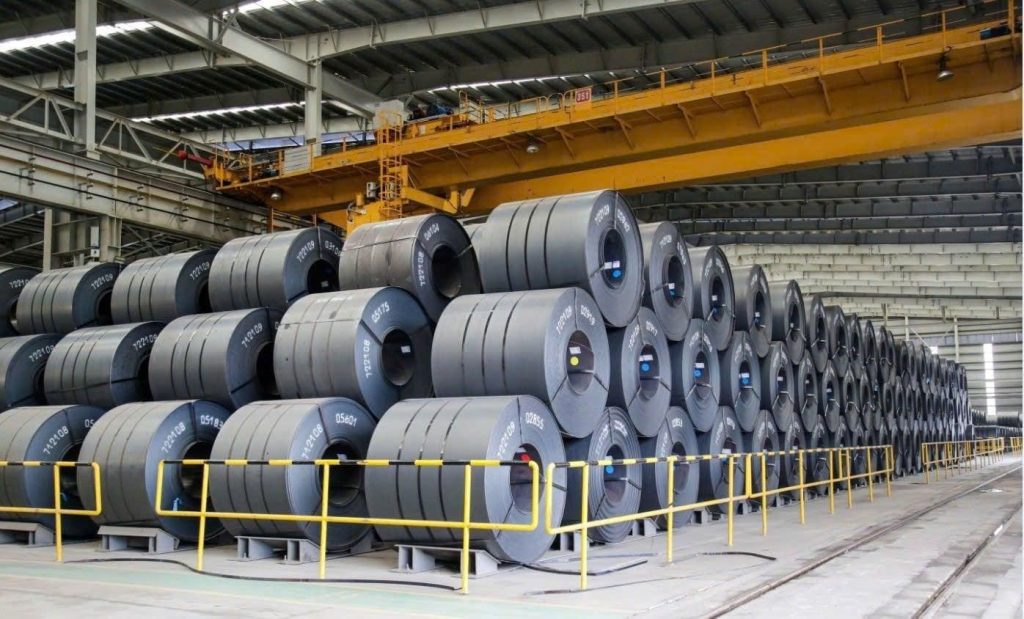
- Cold-rolled coils
- Steel sheets
- Steel plates
- Galvanized and other coated steel products
These materials are used across manufacturing, construction, transportation, machinery, and industrial equipment.
Steel Pipes and Tubular Products
Steel pipes and hollow sections are produced through different manufacturing routes, depending on their intended use.
Common product categories include welded pipes, seamless pipes, and structural hollow sections.
Applications range from industrial piping and mechanical systems to structural frameworks and infrastructure projects.
Product selection requires attention to dimensions, steel grade, manufacturing method, applicable standards, and operating conditions.
6. Why Quality and Specifications Matter
Steel products may look similar but differ significantly in their technical properties and suitability for particular applications.
Before sourcing material, buyers should consider:
- Steel grade: Chemical composition and mechanical properties
- Dimensions and tolerances: Thickness, diameter, length, and permitted variation
- Applicable standards: Relevant ASTM, EN, ISO, API, or other project specifications
- Surface condition and coating: Suitability for the intended environment
- Material documentation: Mill test certificates, inspection reports, and traceability requirements
- Packaging and transportation: Protection against damage, corrosion, and improper handling
The required documentation and inspection scope should be agreed upon before shipment, particularly for technically demanding applications.
7. The Importance of International Steel Supply Chains
The steel industry is highly interconnected.
Iron ore may be mined in one country, processed into metallic iron in another, converted into semi-finished steel elsewhere, and finally rolled into products for an international customer.
As a result, industrial buyers must consider more than the quoted material price.
Supplier reliability, material specifications, production lead times, transportation conditions, documentation, and delivery terms all affect the overall sourcing decision.
Understanding the full value chain helps companies identify suitable supply options and communicate more effectively with producers, traders, logistics providers, and inspection organizations.
8. The KGG Perspective
At Keysan Golden Gate Trading (KGG), we recognize the importance of understanding how industrial materials move through global supply chains.
From steel raw materials and semi-finished products to long, flat, and tubular steel, each product category has distinct specifications, sourcing considerations, and commercial requirements.
A clear understanding of these differences is essential when evaluating international procurement opportunities and coordinating the movement of industrial materials.
Businesses looking for steel sourcing information can contact KGG to discuss their product requirements and commercial inquiries.
Conclusion
The steel value chain extends far beyond the initial production of iron and steel.
It connects raw material suppliers, ironmaking facilities, steel producers, rolling mills, international traders, logistics providers, and end users.
Understanding the differences between iron ore, DRI, billets, blooms, slabs, and finished steel products provides a stronger foundation for effective industrial sourcing.
For businesses operating in international markets, technical knowledge combined with careful supplier evaluation and supply chain planning can support better procurement decisions.
References
- World Steel Association — The Steelmaking Process
- World Steel Association — Raw Materials
- American Iron and Steel Institute — Steel Production
- EUROFER — Statistical Definitions of Steel Products
This article is provided for general industry information. Specific material requirements should be verified against the relevant technical standards, supplier documentation, and project specifications.